
Understanding the Latest Trends in the Oral Pouch Industry
The oral pouch category has moved well past its early niche status — it’s now one of the fastest-growing segments in the global nicotine products market, and the trends shaping it in 2026 tell a clear story about where the industry is heading.
1. Growth is accelerating, not slowing
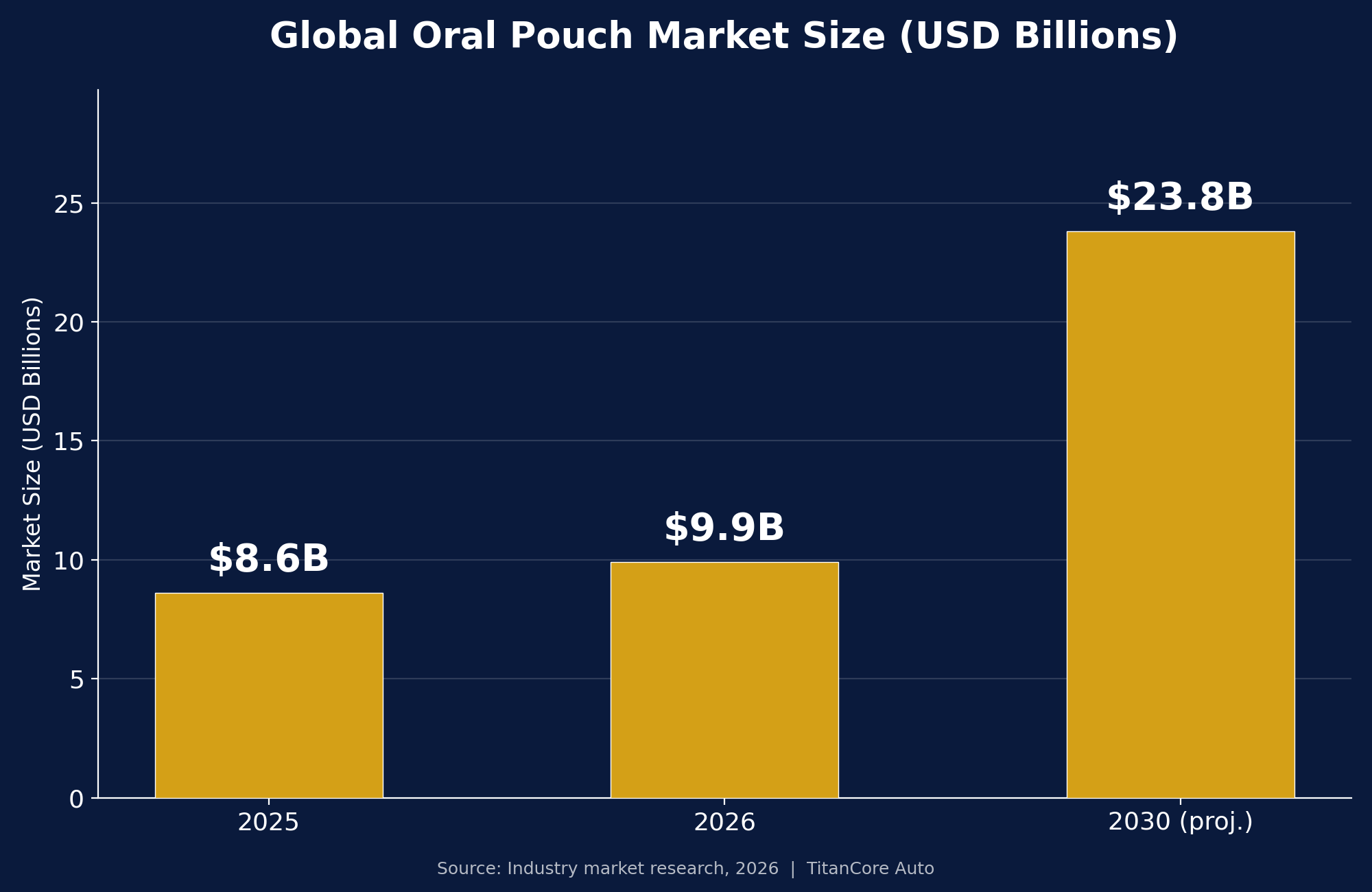
Multiple market analyses put the global oral pouch market in the high single-digit billions for 2026, with projections showing continued double-digit annual growth into the early 2030s. In the U.S. specifically, convenience store sales in the smokeless tobacco category — largely driven by pouches — climbed sharply year-over-year in recent reporting.
2. Flavor and format innovation is intensifying
As competition increases, brands are differentiating through flavor variety, pouch strength options, and new formats — moving beyond the standard offering to capture different consumer preferences and price points.
3. Manufacturing capacity is expanding globally
Growth on the retail side is driving real investment on the production side. Contract manufacturers are opening new facilities to serve brand owners entering or scaling in the category, and companies across North America, Europe, and Asia are investing heavily in new plants and automation to keep up with demand.
4. Regulatory attention is increasing alongside growth
As the category scales, it’s drawing more regulatory scrutiny — particularly around product oversight and the rise of unauthorized or unregulated products entering the market. Industry leaders have specifically called for regulators to take a more active role in managing the category as it matures, to protect the legitimate market from illicit competition.
5. Automation is becoming the baseline, not the upgrade
Perhaps the clearest trend: manufacturers are no longer treating automation as optional. Precision filling, dust-free material handling, and modular scalable lines are becoming standard expectations rather than premium features — a shift TitanCore Auto has built its equipment around from the start.
What this means for manufacturers
The takeaway across all of these trends is the same: demand is growing faster than many production setups were built to handle. Manufacturers who invest now in scalable, automated, and compliant production infrastructure will be better positioned to grow with the category — rather than racing to catch up with it.
Want tags and a visual for this one too?